
From Campbellocking to Locking
The history of Locking
From Don Campbell’s The Campbellock to Locking dance: its African American origins in Los Angeles, Soul Train and the pioneers who shaped the style.
Locking grew from African American social dance spaces and the funk culture of Los Angeles around the turn of the 1970s. It was not a finished vocabulary invented in one day, but a personal style meeting a living dance floor and expanding through the creativity of many people.
The Campbellock
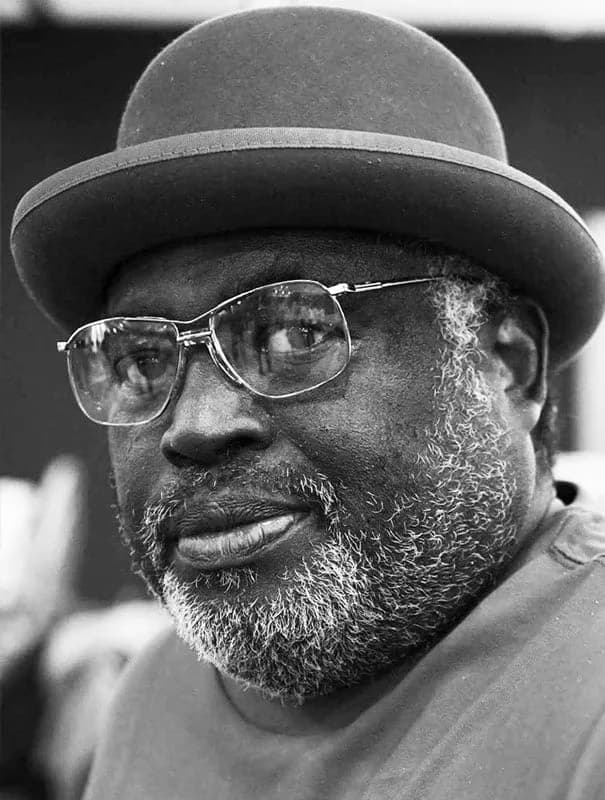
Don Campbell and The Campbellock
Don Campbell created the expression first called The Campbellock at Los Angeles Trade-Technical College. The Lockers’ own history dates its beginning to late 1969, while other participant-adjacent timelines give 1970. His sudden stops, rhythmic pauses, looks, points and large gestures became a distinct way of answering the music and the audience. This is where the story of Locking begins.
The style carried the social party dances, soul, funk, improvisation, humour and pride found in many African American gathering places in Los Angeles. Don was the originator; encounters with other dancers made the form larger, richer and possible to pass on.
1969–1971
The clubs and the original scene
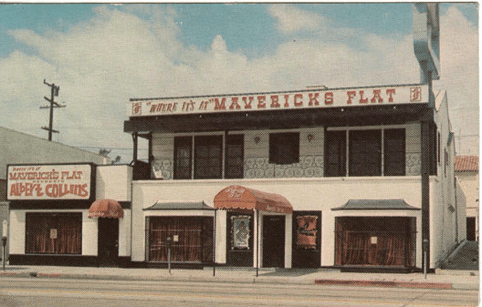
At places including The Citadel, The Summit on the Hill and Maverick’s Flat, dancers from Watts, South Central, Compton, Inglewood and beyond exchanged ideas, steps, attitude and musicality. Each dancer had a character of their own, and improvisation was central.
The early names include Don Campbell, Damita Jo Freeman, Greg “Campbellock Jr.” Pope, Jimmy “Scoo B Doo” Foster, Fred “Mr. Penguin” Berry, Leo “Fluky Luke” Williamson, Tony and Buddy GoGo, Kevin “YoYo” Lombard, James “O.G. Skeeter Rabbit” Higgins, Arnetta “Netta Bug” Johnson and many more. The scene was larger than the group of people who later became most visible in media.
From October 2, 1971
A local expression becomes visible
On October 2, 1971, Soul Train began its national run from Los Angeles. The program gave the dancers and the music a much larger stage. Locks, points, hand slaps, splits and strong individual characters became visible far beyond the clubs where the style had grown.
Television spread inspiration, but an image on a screen could not carry all of the social knowledge. The steps therefore belong together with the people, places, music and culture that gave them meaning.
1972–1973
From individual styles to groups
The GoGo Brothers and the wider GoGo/YoYo family developed synchronized steps, handshakes, skits and routines. During 1972 and into 1973, Creative Generation brought women and men together through the Watts Writers Workshop, joining teaching, performance and community.
According to The Lockers’ own history, the group that became The Lockers appeared in an ABC special featuring Roberta Flack on June 19, 1973. It was first announced as The Campbellockers while the lineup was still changing. The same source dates the official name change to October 23, the seven original members’ joint performance under The Lockers name to November 23, and the CMA contract to December 14, 1973.
Mid-1970s
More groups, more voices
The Lockers were never the whole Locking scene. Groups such as 33RPM, The Ghetto Dancers and Something Special, along with independent club and street dancers, carried the development forward.
As Locking spread from neighbourhoods in South Los Angeles to other parts of Southern California and across the United States, it produced both new encounters and misunderstandings. Knowledge shared through personal exchange could carry more of the dance’s context than movement recreated only from television or film.
1980s onward
Film, travel and a global dance
Breakin’ and Breakin’ 2 gave West Coast street dance enormous international visibility. They also contributed to different forms and names being mixed together, one reason locking, popping, breaking and “poplocking” are still sometimes used imprecisely.
Direct exchange mattered. Something Special, featuring Jimmy “Scoo B Doo” Foster, showed Locking in Japan during the 1970s. Tony GoGo later moved to Japan and taught for decades. Travel, workshops, VHS tapes, films and eventually the internet built bridges from Los Angeles to scenes around the world.
Los Angeles → the world
Locking develops local histories
Today there are strong Locking cultures in Japan, the United Kingdom, France, Denmark, Sweden, Korea, Brazil, Germany, the Netherlands, China and many other countries. Each place has its own story: who first showed the dance, who sought knowledge at the source, which crews and clubs built a scene and which events gathered the next generation.
These local stories also deserve documentation. They show how a culture travels, is interpreted and finds new expressions while its connection to the origin can be preserved. Sweden’s history is therefore part of Locking’s continuing journey, not a replacement for its Los Angeles origin story.
Credit / Context
A pioneer—but in which context?
On this site, we distinguish between pioneers from Locking’s original Los Angeles era—the people who created or developed the dance early on—and pioneers who later established Locking in a particular country or local scene. Someone who helped build Locking in Sweden can rightly be described as a Swedish Locking pioneer without being presented as an originator of the dance itself.
Both contributions deserve recognition. Clear context allows us to honour the dance’s source as well as those who taught, organised and built new scenes for later generations.