
Sweden · 1980s · Power Locking
Karl Dyall · POP-C
Interview with POP-C
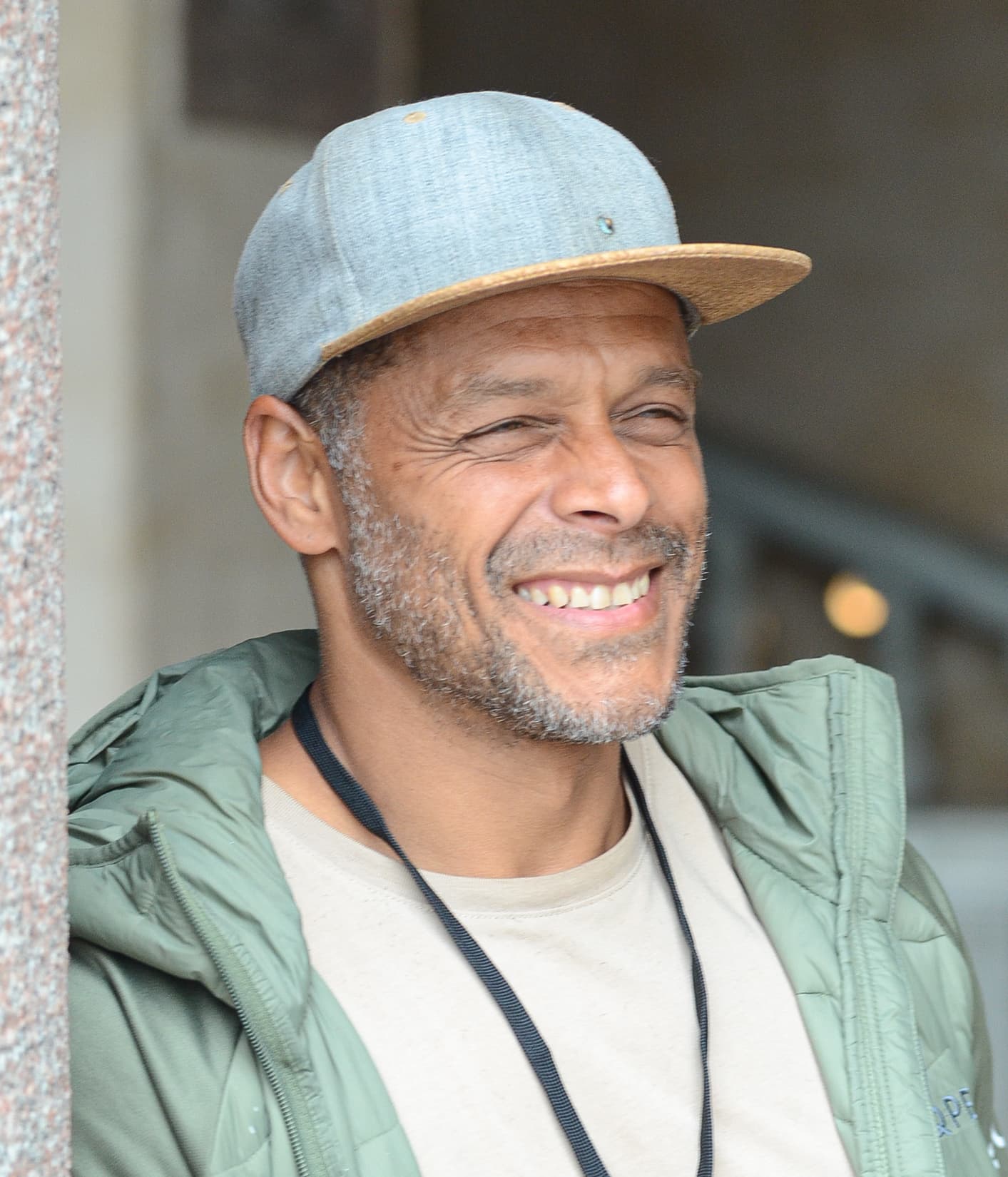
Karl Dyall, known in the dance community as POP-C, reflects on Sweden’s early street-dance scene, the crews and dancers who shaped him, the balance between technique and funkiness, and the importance of finding your own flavour.
Interview answers by Karl Dyall, POP-C.
Explore The Next Generations1. Where are you from, and where does your style/flavour come from?
I was born in England, but came to Sweden in the late 1970s after spending a few years in Barbados. My father was a musician and recorded some really funky songs with his group, The Modern Sound Corporation, released on the K-Tel label. Check them out — they were hot in the ’70s.
Which dancers, performers or artists influenced your dancing? Or perhaps something else, like Kung Fu?
Of course, The Jacksons were a big inspiration. They were always picking up and showing the latest popular dances.
I didn’t really know what Locking was until I hooked up with Eva “Aunty Boogaloo” Williams and Dele “Ski-D” Shekoni, who were among the real pioneers of street dance in Sweden. Together we formed the dance crew Sycronized Bodys and toured Scandinavia from around 1984.
Luckily, we got hold of some VHS tapes of the TV show Soul Train, and we copied everything we could.
Later, I joined the dance crew Bezerk, and together with the original members — Cherno Jah, Quincy Jones, and the brothers Kelly and Themba Tainton — we won the first Swedish Championships in street dance.
Back then, I was primarily a “Popper” — or at least that’s what I thought I was, haha! But since the brothers’ speciality was Locking, I also performed a few Locking routines.
It wasn’t until I met Damon Frost in 1986, and shortly afterwards when we hooked up with Bebop, that I really started focusing on being a Locker.
Bebop coached me before the Swedish Freestyle Championships, which I won — much thanks to him. I later competed in the World Championships but was disqualified because, for some reason, they couldn’t play my music.
Together with Damon and Bebop, we started the dance crew New Position, and we became fairly successful. We were often hired for all kinds of gigs, from clubs and tours to national television.
We also travelled to Denmark to battle. That’s where we met a lot of British Lockers, including Anthony, Warren and Marc Diaz.
During this period, I was also successfully competing in Tae Kwon Do, which naturally influenced my Locking and pushed it in a more powerful direction.
In fact, my friend Marc Diaz, who was a very powerful and athletic Locker, called it “Power Locking.” He became a big influence on me. We hung out, did a few shows together, and also started teaching Locking at Move Dance Center in the early 1990s.
2. What are your reflections on the Funk Styles scene today compared to when you started?
What’s better, what’s not, and how has it evolved? What do you consider over- or underrated?
I completely understand that everyone wants their dancing to become more and more intricate, but the trade-off can sometimes be the funkiness of it all.
I remember watching Anthony and Warren perform the simplest routines. Meanwhile, I would try to cram as many moves as possible into one bar of music.
Who often brought the crowd down?
They did. :-)
They always kept their cool and stayed funky.
That was a good lesson.
3. What do you think about mixing different styles in one solo?
Locking, Popping, Breaking, Hip-Hop, etc.
I’m happy for those who keep it clean and authentic, and I’m also happy for those who mix things up.
There is a difference between being influenced by something and simply taking bits and pieces from different styles and randomly forcing them together.
Be clever.
Is it organic? Does it look good? Does it feel good?
Cool!
As my father always told me:
“It doesn’t matter what you do, as long as you look good doing it.” :-D
4. Tell us about one of your most memorable shows, club nights, battles or events.
Of course, the first battles I ever took part in at the infamous Kungsträdgården — King’s Garden — in Stockholm.
It was always packed, and you never knew what to expect.
Never before had so many young people from all the different suburbs gathered in one place, night after night. Hundreds, sometimes thousands, of anxious teenagers.
There were battles in every corner, but especially on the stage in the centre of the park, where the most prominent dancers came to prove their skills.
5. Is there someone out there who you feel should get more attention?
Someone who deserves more credit than he or she gets, perhaps someone unknown to others, or someone who has been misjudged?
Really, I would say the Locking generation that came after us.
The people who persistently attended or organised the different jams, taught others, and handed the funk over to today’s Locking generation.
Patrik Helge, Oscar Petré, Manne Schütt and Robert Wäger are a few worth mentioning.
And of course Damon Frost, for always supporting the scene in so many different ways.
A true ambassador!
6. Are you still active? If so, in what way?
Battles, shows, teaching, producing, music, merchandise or events?
Today, I try to help by creating opportunities for younger dancers in any way I can.
In other words, not much. ;-)
7. What do you think about crews?
Is it important to be part of one? What are the advantages and disadvantages? Are you, or have you been, in one?
The energy of a crew can really propel your skills forward because everyone brings their own input.
It all comes down to personal preference, really. I’ve tried both.
When you go solo, you have to be very sharp because you have no one else to lean on.
8. What’s your favourite music to get down to?
Top five artists or tracks?
Wow, there are so many!
Okay, straight off the top of my head:
Anything by The Meters — something like “Cissy Strut.” :-D
9. Do you have any recommendations for the funkateers out there, young and old?
Ways of thinking, practising, developing, etc.
Funk hits you.
You react instinctively, and you can’t help it.
At least, that’s the image you project towards others.
Find out what your flavour is — not somebody else’s.
At the same time, you can learn from history. Knowing where you come from can actually help you understand the direction you want to go.
10. Anything else you’d like to point out?
I’m full of awe and respect for all the Lockers of today who are keeping it alive.
Injecting new ideas and flavours, pushing it forward, while at the same time sustaining it.
Be good!
POP-C