
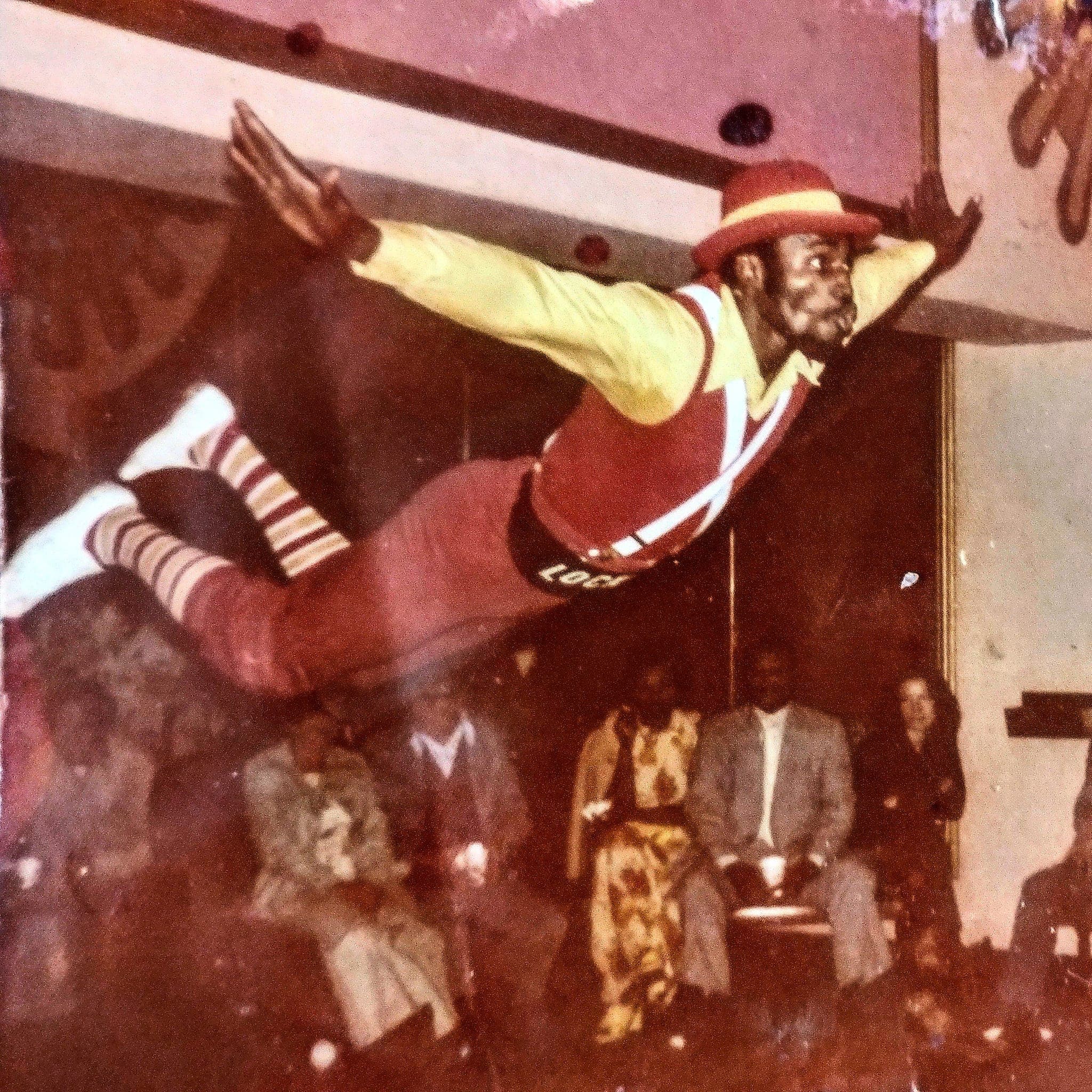
動きの中にある基礎
ステップ & ムーブ
ロッキングを形づくったムーブの名称、起源、その背景にある物語を扱います。
35 ステップ & ムーブ
キャンベルロッキングとロッキングのステップやムーブは、最初から固定された一覧として存在したわけではありません。Don Campbellは自分自身のアイデアと、周囲ですでに存在していた動きを取り入れ、ほかのパイオニアたちはダンスが発展する中で新しい動きを生み出し、変化させ、名前を付け、組み合わせていきました。
一部の動きは、指をさす、挨拶する、fiveを交わすといった日常的なジェスチャーやソーシャル・パーティーダンスからつながっています。リズミカルなフットワーク、splits、アクロバット、ショーマンシップなどの要素には、アフリカ系アメリカ人のヴァナキュラー・ジャズダンスやタップダンスに、さらに古い前例があります。これらの形式は、伝統的なアフリカのダンス文化ともつながる、より長いアフリカン・ディアスポラの流れの中に位置します。ただし、下にあるすべてのステップが単一の直接的な起源を持つという意味ではありません。ロッキングは、アフリカ系アメリカ人のLos Angelesの中で、継承、交流、変化、そして新しい創造を通じて成長しました。
01
BASIC LOCK
Basic Lockは、音楽のビートに合わせて腕の動きをためらうように止めたり、フリーズさせたりする動きです。Don Campbellが1960年代末から1970年代初頭、当時人気のソーシャルダンスだったFunky Chickenを試している中で、一瞬止まったり固まったように見える動きを生み出しました。こうした止まりはlocks、またはlocking upと呼ばれるようになりました。
02
DOUBLE LOCK
Double Lockはlockを続けて2回繰り返し、bounceするような感覚とリズムのアクセントを生み出す動きです。Don CampbellがDamita Jo Freemanと出演した初期のSoul Trainでは、この方法でlockを繰り返し、ビートを示すと同時に彼独自のtimingを形づくっている姿を見ることができます。
03
THE LEO LOCK
Leo “Fluky Luke” Williamsonは、両手の外側を腰に当て、肘を前へlockする独特の形を発展させました。彼の並外れた柔軟性がこの姿勢に際立った形を与え、その後はほかの柔軟なlockerたちも行うようになりました。
04
GIVING OR ASKING FOR FIVE
ダンスをしながら、二人の間、または自分自身との同意や共感を表すhand slapです。Don Campbellはlocksとソーシャルダンスの間にこの動きを入れました。Fiveを交わす行為はDonがダンスへ取り入れるずっと以前から、アフリカ系アメリカ人コミュニティで承認や共感を表す伝統的なジェスチャーでした。人々が良いムーブを見て笑顔で反応すると、Donや他のパイオニアは手を差し出してfiveを受けることがあり、手のひらを合わせることはその承認に応える意味を持ちました。Giving Fiveは、良いことが起きたことを一緒に認めるジェスチャーです。
05
LOCKING POINTS
後にUncle Sam pointsとも呼ばれました。アメリカ軍の募集ポスターでUncle Samが見る人へ指を向けるイメージと結びついた名称です。友人やパートナーを指さすことは、アフリカ系アメリカ人コミュニティでもメッセージや承認を伝えるジェスチャーであり、離れた相手への挨拶にも使われていました。Don Campbellが自分のダンスへ取り入れる以前から存在していたジェスチャーです。伝えられている話では、Donが踊っている最中、テーブルにいた女性が彼の独特なスタイルを見て笑ったため、Donが人々が普段するように彼女を指さし、「あなたを見た」という意味を伝えたことが初期Locking pointになったといわれます。その後、他のパイオニアがdouble、triple pointsを加え、ロッキングの流れをさらに滑らかにしました。
06
HAND CLAPS
Back hand clapsとback-front hand clapsは、初期ロッキングの非常に基本的な要素でした。突然止まり、また始める方法で、pacingの中で単独で行ったり、他のムーブの間でよく使われたりしました。Donは初期のwrist rollsも自分のスタイルに取り入れました。その後、wrist rollsと他のムーブのさまざまな組み合わせがback-front hand clapsの前に配置されるようになり、ダンスの連続性と発展に貢献しました。
07
UPLOCK
UPLOCK、現在ではMuscle Manとも呼ばれる動きは、通常ロッキングのムーブを始めるときに両腕を上へ投げ上げるように使います。ストリートで“Hey”“What’s up?”と挨拶するジェスチャーのように、自分の存在を知らせるannouncementの性格があります。
08
PACE / KEEPING TIME
Pace(Keeping Timeとも呼ばれる)は、リズムを保ち、Lockingのムーブ同士をつなぐための基本的なタイミングの動きです。音楽に合わせて片腕を身体の外側へ横に打ち出します。このジェスチャーはジャズの演奏者や観客が拍を示す姿を思わせ、Lockingでは行進や軍隊的な動きに近い性格を帯びることもあります。
09
WRIST TWIRL / WRIST ROLLS
Wrist twirlはwrist rollまたはrollとも呼ばれる、Lockingの基本的な動きです。手を握った状態で音楽に合わせて手首を滑らかに回転させ、明確なlockやstopで終えることができます。Don Campbellは初期のwrist rollsを自身のスタイルに取り入れ、その後の組み合わせはムーブ同士の連続性を生み出すことに貢献しました。
10
THE DON CAMPBELL WALK
Don Campbellが作ったsliding step型の移動ムーブで、locksやstuntsの間に前へ進むときに使いました。
O.G. Skeeter Rabbitの資料
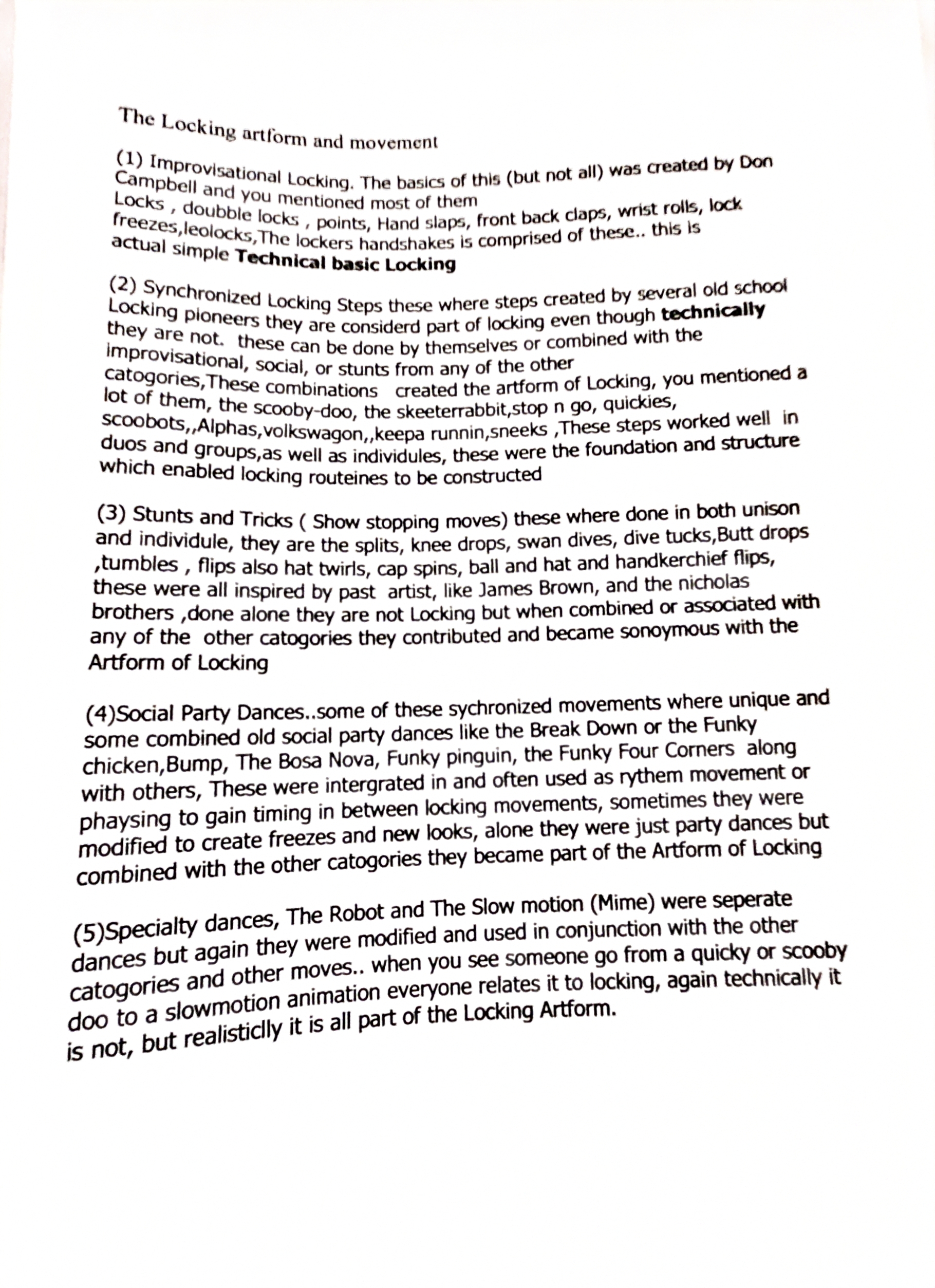
ロッキングを形づくる5つの要素
O.G. Skeeter Rabbitは、ロッキングが一つのムーブよりはるかに大きなダンスであることを説明するために、5つのムーブメント・ファミリーを示しました。それぞれは独立して存在できますが、ロッキングのタイミング、キャラクター、locksと組み合わさることで特別な役割を持ちます。
- 01
Improvisational Locking
即興と技術的な基礎
フリースタイルの中で使われるlocks、points、hand slaps、wrist rolls、freezes、そのほかの基礎的な動き。
- 02
Synchronized Locking Steps
シンクロしたロッキング・ステップ
複数のパイオニアによって発展し、ソロ、デュオ、グループがルーティンを構成するときに使うステップ。
- 03
Show-stopping moves
スタントとトリック
splits、knee drops、dives、flips、プロップを使ったtricksなど。ロッキングのほかの言語と組み合わされることで、ダンスの一部になります。
- 04
Social Party Dances
ソーシャル・パーティーダンス
当時のソーシャルダンスは、ロッキングのムーブの間にgroove、timing、transitionを与え、ダンスフロアとのつながりを生きたまま保ちます。
- 05
Specialty dances
スペシャリティ・ダンス
Robot、slow motion、mimeはそれぞれ独立した形式であり、ロッキングの中に織り込むことでコントラスト、アニメーション的な感覚、新しい組み合わせを生み出せます。
 元画像を開く
11
THE SCOOBY DOO
Jimmy “Scooby Doo” Fosterが作りました。基本のScooby Dooは、両手を使ったuplock announcementからkick、stepへつながります。
12
THE SCOOBOT
これもJimmy “Scooby Doo” Fosterが作った独特のステップです。
13
THE SCOOBY WALK
Jimmy Foster特有の歩き方で、GregがPimp Walkと呼んでいた動きに似ています。
14
THE PIMP WALK
Greg “Campbellock Jr.” Popeが作りました。Gregがロッキングへ加えたさまざまなムーブは、スタイルの自由な流れと連続性を作ることに貢献しました。彼はScoobotをhop型の動きに変化させることもしました。上で触れたSneekやStop N Go(Quickies)のようなムーブはJimmy “Scooby Doo” FosterがGreg Campbellock Jr.のアイデアとともに作り、多くのムーブの名前はDamita Jo Freemanが付けました。
15
QUICKIES /STOP N GO
Quickies、またはStop N Goは、古いSara Walkのムーブを変形する形で発展しました。素早い動きは、ゴムのように跳ね上がるカートゥーンキャラクターの動きを思わせます。
16
THE SKEETERRABBIT
James “Skeeter Rabbit” Higginsが作りました。Nicholas Brothersのshuffleの動きと、ストリート遊びのhopscotchからインスピレーションを受けました。SkeeterがScooby Dooの終わりにこの動きを付けたことで連続したムーブになり、さまざまな形へ発展させて使いました。他のパイオニアもSkeeter Rabbit shuffleのバリエーションを作りました。1970年代中頃にはストリートギャング文化のダンスムーブがロッキングと混ざり、Crip WalkがSkeeter Rabbitのフィニッシュとして入る例があり、Michael “Peekaboo” FrenkeとLeo “Shaboo” Walkerがこの流れと関連して言及されています。
17
HAT TWIRLES
Hat twirlsはロッキングへ入る以前から多くのエンターテイナーが使っていた動きでした。複数のロッキングダンサーが自分たちのスタイルに取り入れ、とくに“Sneaky T”とJohn “Okie Doke” Wilsonが知られています。その後Don Campbellの代表的なシグネチャーの一つになりましたが、基本のhat spinは1974年、The Lockers最初の大規模ツアー中にSkeeter RabbitがDonへ教えたと記録されています。
18
THE WHICH A WAY
Leo “Fluky Luke” WilliamsonがWhich-A-Wayをロッキングのシグネチャームーブとして発展させました。ただし元々はDamita Jo Freemanが作ったソーシャル・パーティーダンスのステップで、彼女はFlukyよりゆっくり腰を回す変形スタイルを使っていました。彼女は自分のバージョンを“DJ Which-A-Way”と呼び、複数のSoul Train映像で確認できます。
19
LEO WALK
Leo Walkは、左右へステップを踏みながらrockingする移動ムーブです。
20
KILLING ROACHES / SLAPPING ROACHES / CATCHING ROACHES
床の近くで音楽のリズムに合わせて床を手で叩き、虫を捕まえたり殺したりするように表現するジェスチャーです。Killing Roaches、Slapping Roaches、Catching Roachesなど複数の名称が使われてきました。記録と用語が一致しないため、ここでは一人の創作者を断定していません。
21
THE SLOW MOTION
Fred “Mr. Penguin” Berryがロッキングへ取り入れました。Slow Motionはマイムの影響を受けたロッキングの変形表現で、すべての動きをゆっくりにし、顔の表情を強調します。
22
THE VOLKSWAGON
Volkswagonはマニュアル車の運転からインスピレーションを受けたムーブです。ギアを変え、車が前へ跳ねるような感覚を音楽のリズムに合わせて真似します。
23
THE FUNKY GUITAR
音楽のリズムに合わせ、ギターを弾く姿を真似するジェスチャー系のムーブです。LockerLegendsでは、Damita Jo Freemanの初期Soul Train出演や、Don Campbellとカップルで踊る場面にこの動きを記録しています。
24
THE HITCHHIKE
ヒッチハイクを真似する動きです。親指を立てたまま横へ移動し、Rocksteadyのファンキーなhip grooveを組み合わせます。
25
SNEEK
SneekはソウルダンスBreakdownの変形でした。上半身を左右にひねりながら外側の腕を上げ、何かを探すようなジェスチャーをします。その後The Lockersは、商業パフォーマンスでカメラアングルにより見えやすくするため、内側の腕を使う形を発展させました。
26
THE HELICOPTOR
The Helicopterは、Mr. Penguinが周囲の全員を一続きの動きで指し、認め、挨拶するやり方です。
27
THE KEEPA RUNNIN
GoGo BrothersのTony LewisとBuddy Lombardが作りました。Keepa Runninはkick、step、slideを組み合わせたフットワーク・ムーブです。
28
The Sara Walk
Sara Walkは、前後へpacingしながら移動するムーブです。
29
THE SUPER FLY
帽子を使うムーブで、頭を振りながらブンブン飛ぶハエを真似します。
30
THE “ALPHA”
Alpha Omega Andersonが作り、自分自身のロッキングスタイルへ取り入れた、後ろへ倒れながらhandspringするようなフロアムーブです。素早く回転するcorkscrew styleのロッキングムーブも含まれました。
31
STUNTS & SPLITS
Half splitsはロッキング以前からNicholas Brothers、Sammy Davis Jr. Trioなどの歌手、ダンサー、グループがパフォーマンスで使っていました。1960〜70年代にはJames Brownがhalf splitを大きく大衆化しました。彼のステージダンスやステップはアフリカ系アメリカ人のソーシャル・パーティーで広く真似され、half splitsやThe Alligatorのようなフロアムーブが含まれていました。Camel WalkやMashed Potatoのようなムーブも彼のパフォーマンスから取り入れられました。その影響は非常に大きなものでした。Don Campbellもパーティーダンスの流れの中で、ソーシャルダンスとlocksの間にhalf splitsやknee dropsを繰り返し使いました。Kick splitsはDon Campbellがロッキングへ取り入れましたが、それ以前からJames Brown、タップダンサー、パーティーダンサーたちが使っていました。High-flying knee drops、running knee drops、Swan DiveもDonのスタイルの一部になりました。
32
BUTT DROPS
John “Sambo Lock” McCloudが作った、ダイナミックで大胆なstuntです。ダンサーがジャンプして両脚を前へ伸ばし、音楽のビートへ正確に合わせてお尻で着地します。
33
LOCKING HAND SHAKES
Soul Train Dance ContestでDamita Jo FreemanとJimmy “Scooby Doo” Fosterが一緒に行ったものが初期の例として記録されています。一部のLocking handshakesはGreg “Campbellock Jr.” Popeが作り、Greg Campbellock Jr.とFluky Lukeが最初に見せたと伝えられています(Wattstax映像参照)。GoGo Brothersも複数の異なるハンドシェイクを取り入れました。こうしたハンドシェイクは、都市部のストリートで使われていたunity handshakesを表現したものです。
34
THE ROBOT
技術的にはRobotそのものはlockではありませんが、Don CampbellとCharles “Robot” Washingtonの関係を通じて、Robotingは長い間ロッキングの歴史とともに存在してきました。ロッキングが発展する過程と商業的ロッキング・パフォーマンスの両方に含まれたことで、二つの形式はつながり続けました。Charles “Robot” WashingtonはRobotを一つのダンスとして、そしてロッキング・サブカルチャーの中へ紹介した中心人物として記録されています。
35
Your freestyle
You can be free in your own style while remaining within an established dance form such as Locking. In the end, what matters is how you present and represent the dance. Campbellocking was Don Campbell’s freestyle. It inspired what people today call Locking, and many dancers have since contributed steps and ideas to the form. Ultimately, though, the dance also comes down to how you represent yourself.
Words from Don himself
“Nobody can beat you being you.”
Don explains that you can copy or follow someone for a while when you are learning, but eventually something has to come from within yourself.
“Nobody can beat you being you.” If you spend all your time trying to copy somebody else, you will never beat that person at being themselves. You have to keep something of yourself in the dance. Take everything you learn from other people and evolve from it.
When you walk out onto the floor, you should be yourself.
You can learn Don Campbell’s way of doing things, but to truly understand his approach, you also have to understand the freedom behind it. If Don goes left, you do not have to go left — you can go right. Go the way you feel. Hold your arms the way that feels natural to you.
You are still doing the same dance, but you are doing it your way. And that is the beauty of it.
Don then talks about staying humble and gives credit to God for guiding him. He says that in the early days he never asked to become “Don Campbell” or to create something important. When people ask him how he created the dance, he says he does not really know — he felt that his inner voice simply told him to get out there and do what he did, and he was grateful to have been chosen.
口承の伝統や当事者中心の資料によって、名称や創作者についての説明が異なる場合があります。十分な根拠がない場合は、クレジットを断定せず開いたままにしています。より多くの内容を資料で確認できるようになれば、この一覧も継続して拡張できます。