움직임 속의 기초
스텝 & 무브
락킹을 형성한 무브들의 이름, 기원, 그리고 그 뒤의 이야기를 다룹니다.
35 스텝 & 무브
캠벨락킹과 락킹의 스텝과 무브는 처음부터 닫힌 목록처럼 존재한 것이 아닙니다. Don Campbell은 자신의 아이디어와 주변에 이미 존재하던 움직임을 가져왔고, 다른 파이오니어들은 춤이 발전하는 과정에서 새로운 움직임을 만들고, 변형하고, 이름 붙이고, 서로 결합했습니다.
일부 움직임은 사람들이 일상에서 이미 사용하던 제스처—가리키기, 인사하기, five를 주고받기—와 소셜 파티 댄스에서 이어졌습니다. 리드미컬한 풋워크, splits, 아크로바틱, 쇼맨십 같은 다른 요소들은 아프리카계 미국인의 버내큘러 재즈 댄스와 탭댄스에 더 오래된 선례를 가지고 있습니다. 이러한 형식은 전통적인 아프리카 춤의 관습과 연결된 더 긴 아프리카 디아스포라적 흐름 안에 놓여 있습니다. 그렇다고 아래의 모든 스텝이 하나의 직접적인 출처를 가진다는 뜻은 아닙니다. 락킹은 아프리카계 미국인의 Los Angeles 안에서 계승, 교류, 변형, 새로운 창작을 통해 성장했습니다.
01
BASIC LOCK
Basic Lock은 음악의 비트에 맞춰 팔의 움직임을 머뭇거리듯 멈추거나 얼리는 동작입니다. Don Campbell이 1960년대 말에서 1970년대 초, 당시 인기 소셜 댄스였던 Funky Chicken을 시도하다가 잠시 멈추거나 얼어붙은 듯한 모습을 보이면서 만들어졌습니다. 이런 멈춤은 locks 또는 locking up으로 불리게 됐습니다.
02
DOUBLE LOCK
Double Lock은 lock을 두 번 연속 반복해 bounce하는 느낌과 리듬의 강조를 만드는 동작입니다. Don Campbell이 Damita Jo Freeman과 함께 출연한 초기 Soul Train 영상에서 이 방식을 사용하는 모습을 볼 수 있으며, lock의 반복은 비트를 표시하는 동시에 그의 개인적인 timing을 형성하는 방법이었습니다.
03
THE LEO LOCK
Leo “Fluky Luke” Williamson은 양손의 바깥쪽을 허리에 대고 팔꿈치를 앞으로 lock하는 독특한 형태를 발전시켰습니다. 그의 뛰어난 유연성이 이 자세에 선명한 모양을 주었고, 이후 다른 유연한 locker들도 이 동작을 사용했습니다.
04
GIVING OR ASKING FOR FIVE
춤을 추면서 두 사람 사이 또는 자기 자신과의 동의를 표현하는 hand slap입니다. Don Campbell은 locks와 소셜 댄스 사이에 이 동작을 넣었습니다. Five를 주고받는 행위는 Don이 춤에 도입하기 훨씬 전부터 아프리카계 미국인 공동체에서 인정과 공감을 표현하는 전통적인 제스처였습니다. 사람들이 좋은 무브를 보고 웃으며 반응하면 Don과 다른 파이오니어들은 손을 내밀어 five를 받곤 했고, 손바닥을 마주치는 것은 그 인정에 응답하는 의미였습니다. Giving Five는 좋은 일이 일어났음을 함께 인정하는 제스처입니다.
05
LOCKING POINTS
이후 Uncle Sam points라고도 불렸습니다. 미국 군 모집 포스터에서 Uncle Sam이 관객을 향해 손가락으로 가리키는 이미지와 연결된 이름입니다. 친구나 파트너를 가리키는 것은 아프리카계 미국인 공동체에서도 메시지와 인정을 전달하는 제스처였고, 멀리 떨어진 사람에게 인사할 때도 사용되던 소통 방식이었습니다. Don Campbell이 자신의 춤에 도입하기 전부터 존재하던 제스처입니다. 이야기로는 Don이 춤추는 동안 테이블에 있던 한 여성이 그의 독특한 스타일을 보고 웃자, Don이 사람들이 평소 하던 것처럼 그녀를 가리켜 “당신을 봤다”는 뜻을 전한 것이 초기 Locking point가 됐다고 합니다. 이후 다른 파이오니어들이 double, triple points를 더하며 락킹의 흐름을 더욱 유연하게 만들었습니다.
06
HAND CLAPS
Back hand claps와 back-front hand claps는 초기 락킹의 매우 기본적인 요소였습니다. 갑자기 멈추고 다시 시작하는 방식으로, pacing 중 단독으로 하거나 다른 무브 사이에 자주 사용됐습니다. Don은 초기 wrist rolls도 자신의 스타일에 넣었습니다. 이후 wrist rolls와 다른 무브의 여러 조합이 back-front hand claps 앞에 배치되면서 춤의 연속성과 발전에 기여했습니다.
07
UPLOCK
UPLOCK, 오늘날 Muscle Man이라고도 불리는 동작은 보통 락킹 무브를 시작할 때 양팔을 위로 던지듯 올리는 동작입니다. 거리에서 “Hey”, “What’s up?”이라고 인사하는 제스처처럼 자신의 존재를 알리는 announcement의 성격을 가집니다.
08
PACE / KEEPING TIME
Pace 또는 Keeping Time은 리듬을 유지하고 락킹 동작들을 이어 주는 기본적인 타이밍 무브입니다. 음악의 박자에 맞춰 한쪽 팔을 몸 바깥 옆으로 뻗습니다. 이 제스처는 재즈 연주자와 관객이 박을 표시하는 모습을 떠올리게 하며, 락킹 안에서는 행진이나 군대식 움직임에 가까운 성격을 띨 수도 있습니다.
09
WRIST TWIRL / WRIST ROLLS
Wrist twirl은 wrist roll 또는 roll이라고도 불리는 락킹의 기본 동작입니다. 주먹을 쥔 상태에서 음악에 맞춰 손목을 부드럽게 회전시키며, 뚜렷한 lock이나 정지로 마무리할 수 있습니다. Don Campbell은 초기 wrist roll을 자신의 스타일에 포함했고, 이후의 조합들은 동작 사이의 연속성을 만드는 데 기여했습니다.
10
THE DON CAMPBELL WALK
Don Campbell이 만든 sliding step 형태의 이동 동작으로, locks와 stunts 사이에서 앞으로 움직일 때 사용했습니다.
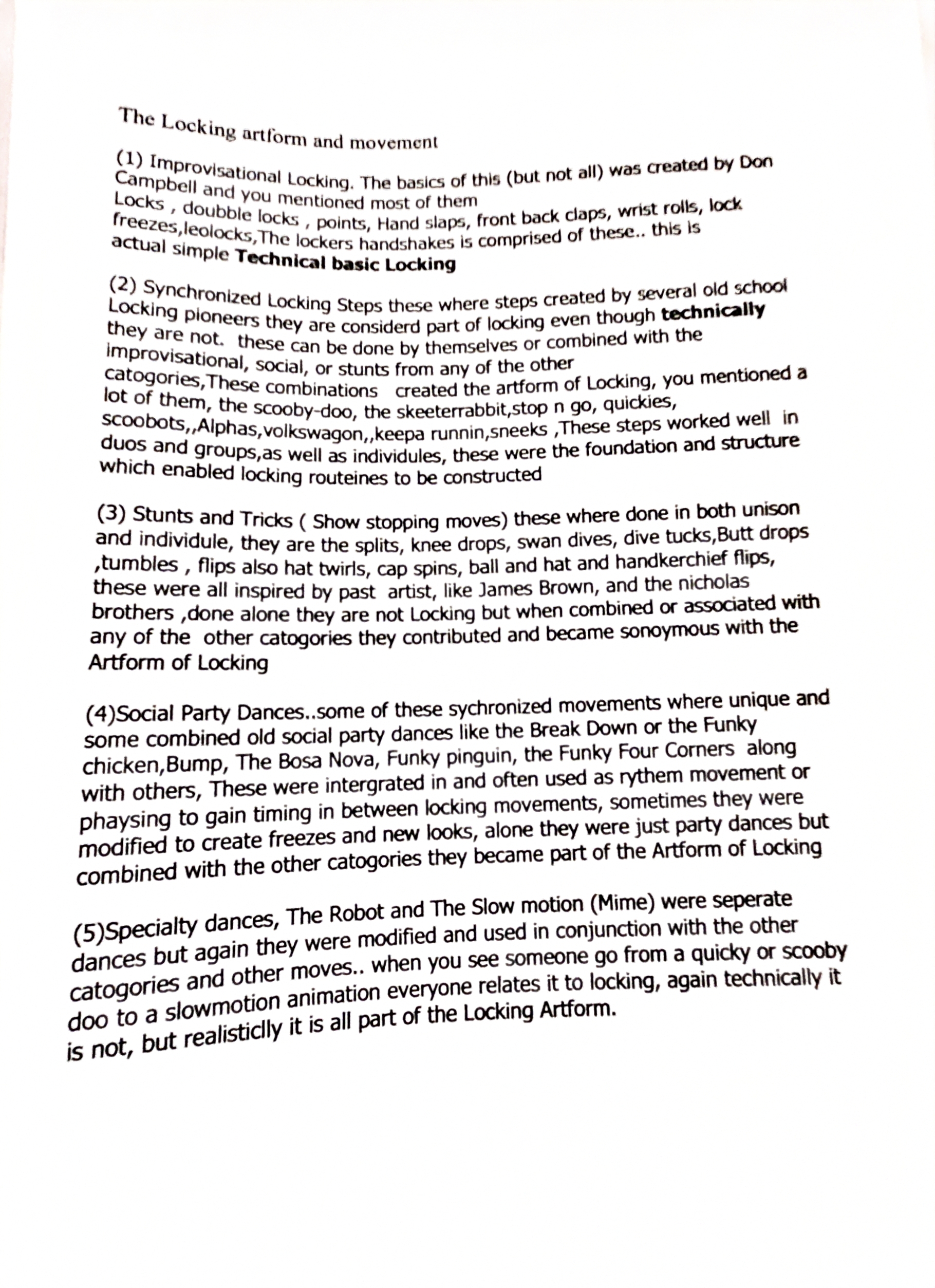
O.G. Skeeter Rabbit의 문서
함께 락킹을 이루는 다섯 가지 요소
O.G. Skeeter Rabbit은 락킹이 하나의 무브보다 훨씬 큰 춤이라는 것을 설명하기 위해 다섯 가지 움직임 계열을 제시했습니다. 각각은 독립적으로 존재할 수 있지만, 락킹의 타이밍과 캐릭터, locks와 결합될 때 특별한 역할을 갖게 됩니다.
- 01
Improvisational Locking
즉흥성과 기술적 기초
프리스타일 안에서 사용하는 locks, points, hand slaps, wrist rolls, freezes와 그 밖의 기초 움직임.
- 02
Synchronized Locking Steps
동기화된 락킹 스텝
여러 파이오니어가 발전시켰으며 솔로, 듀오, 그룹이 루틴을 구성할 때 사용하는 스텝.
- 03
Show-stopping moves
스턴트와 트릭
splits, knee drops, dives, flips, 소품을 활용한 tricks 등으로, 락킹의 나머지 언어와 결합될 때 춤의 일부가 되는 움직임.
- 04
Social Party Dances
소셜 파티 댄스
당시의 소셜 댄스는 락킹 무브 사이에 groove, timing, transition을 제공하며 댄스 플로어와의 연결을 살아 있게 합니다.
- 05
Specialty dances
스페셜티 댄스
Robot, slow motion, mime은 서로 독립된 형식이며, 락킹 안에 엮어 넣어 대비와 애니메이션적인 느낌, 새로운 조합을 만들 수 있습니다.
 원본 이미지 열기
11
THE SCOOBY DOO
Jimmy “Scooby Doo” Foster가 만들었습니다. 기본 Scooby Doo는 양손을 이용한 uplock announcement에 이어 kick, step으로 연결됩니다.
12
THE SCOOBOT
역시 Jimmy “Scooby Doo” Foster가 만든 독특한 스텝입니다.
13
THE SCOOBY WALK
Jimmy Foster 특유의 걷는 방식으로, Greg이 Pimp Walk라고 부르던 움직임과 비슷합니다.
14
THE PIMP WALK
Greg “Campbellock Jr.” Pope가 만들었습니다. Greg이 락킹에 더한 여러 무브는 스타일의 자유로운 흐름과 연속성을 만드는 데 기여했습니다. 그는 Scoobot을 hop 형태의 움직임으로 변형하기도 했습니다. 위에서 언급된 Sneek와 Stop N Go(Quickies) 같은 무브는 Jimmy “Scooby Doo” Foster가 Greg Campbellock Jr.의 아이디어와 함께 만들었고, 많은 무브의 이름은 Damita Jo Freeman이 붙였습니다.
15
QUICKIES /STOP N GO
Quickies, 또는 Stop N Go는 오래된 Sara Walk 무브의 변형으로 발전했습니다. 빠른 움직임은 고무줄처럼 튕겨 올라오는 만화 캐릭터의 동작을 연상시킵니다.
16
THE SKEETERRABBIT
James “Skeeter Rabbit” Higgins가 만들었습니다. Nicholas Brothers의 shuffle 움직임과 길거리 놀이 hopscotch에서 영감을 받았습니다. Skeeter가 Scooby Doo의 끝에 이 동작을 붙이면서 연속적인 움직임이 됐고, 여러 방식으로 발전시켜 사용했습니다. 다른 파이오니어들도 Skeeter Rabbit shuffle의 변형을 만들었습니다. 1970년대 중반에는 스트리트 갱 문화의 춤 움직임이 락킹과 섞이며 Crip Walk가 Skeeter Rabbit의 마무리 동작으로 들어간 사례가 있었고, Michael “Peekaboo” Frenke와 Leo “Shaboo” Walker가 이 흐름과 연결되어 언급됩니다.
17
HAT TWIRLES
Hat twirls는 락킹에 들어오기 전부터 여러 엔터테이너가 사용해 온 동작이었습니다. 여러 락킹 댄서가 이를 자신들의 스타일로 받아들였고, 특히 “Sneaky T”와 John “Okie Doke” Wilson이 알려져 있습니다. 이후 Don Campbell의 대표적인 시그니처 중 하나가 됐지만, 기본적인 hat spin은 1974년 The Lockers의 첫 대형 투어 중 Skeeter Rabbit이 Don에게 가르쳐 준 것으로 기록됩니다.
18
THE WHICH A WAY
Leo “Fluky Luke” Williamson이 Which-A-Way를 락킹의 시그니처 무브로 발전시켰습니다. 하지만 원래는 Damita Jo Freeman이 만든 소셜 파티 댄스 스텝으로, 그녀는 Fluky보다 천천히 엉덩이를 돌리는 변형 스타일을 사용했습니다. 그녀는 자신의 버전을 “DJ Which-A-Way”라고 불렀으며 여러 Soul Train 영상에서 확인할 수 있습니다.
19
LEO WALK
Leo Walk는 좌우로 스텝을 밟으며 rocking하는 이동 동작입니다.
20
KILLING ROACHES / SLAPPING ROACHES / CATCHING ROACHES
바닥 가까이에서 음악의 리듬에 맞춰 바닥을 손으로 치며 벌레를 잡거나 죽이는 것처럼 표현하는 제스처입니다. Killing Roaches, Slapping Roaches, Catching Roaches 등 여러 이름이 사용돼 왔습니다. 기록과 용어가 서로 달라 이곳에서는 한 명의 창작자를 단정하지 않습니다.
21
THE SLOW MOTION
Fred “Mr. Penguin” Berry가 락킹에 도입했습니다. Slow Motion은 마임에서 영향을 받은 락킹의 변형 표현으로, 모든 움직임을 느리게 만들고 얼굴 표정을 강조합니다.
22
THE VOLKSWAGON
Volkswagon은 수동 변속 자동차 운전에서 영감을 받은 무브입니다. 기어를 바꾸고 차가 앞으로 튀는 느낌을 음악의 리듬에 맞춰 흉내 냅니다.
23
THE FUNKY GUITAR
음악의 리듬에 맞춰 기타를 연주하는 모습을 흉내 내는 제스처 기반 무브입니다. LockerLegends는 Damita Jo Freeman의 초기 Soul Train 출연 장면과 Don Campbell과 함께 커플로 춤추던 모습에서 이 동작을 기록합니다.
24
THE HITCHHIKE
히치하이킹을 흉내 내는 동작입니다. 엄지를 세운 채 옆으로 이동하면서 Rocksteady의 펑키한 hip groove를 섞습니다.
25
SNEEK
Sneek는 소울 댄스 Breakdown의 변형이었습니다. 상체를 좌우로 비틀면서 바깥쪽 팔을 위로 올려 무언가를 찾는 듯한 제스처를 합니다. 이후 The Lockers는 상업 공연에서 카메라 앵글에 더 잘 보이도록 안쪽 팔을 사용하는 형태를 발전시켰습니다.
26
THE HELICOPTOR
The Helicopter는 Mr. Penguin이 주변의 모든 사람을 한 번에 이어지는 움직임으로 가리키고 인정하며 인사하던 방식입니다.
27
THE KEEPA RUNNIN
GoGo Brothers의 Tony Lewis와 Buddy Lombard가 만들었습니다. Keepa Runnin은 kick, step, slide가 결합된 풋워크 무브입니다.
28
The Sara Walk
Sara Walk는 앞뒤로 pacing하며 이동하는 무브입니다.
29
THE SUPER FLY
모자를 사용하는 무브로, 머리를 흔들며 윙윙거리는 파리를 흉내 냅니다.
30
THE “ALPHA”
Alpha Omega Anderson이 만들고 자신만의 락킹 스타일에 도입한, 뒤로 넘어가 handspring을 하는 듯한 플로어 무브입니다. 빠르게 회전하는 corkscrew 스타일의 락킹 움직임도 포함됐습니다.
31
STUNTS & SPLITS
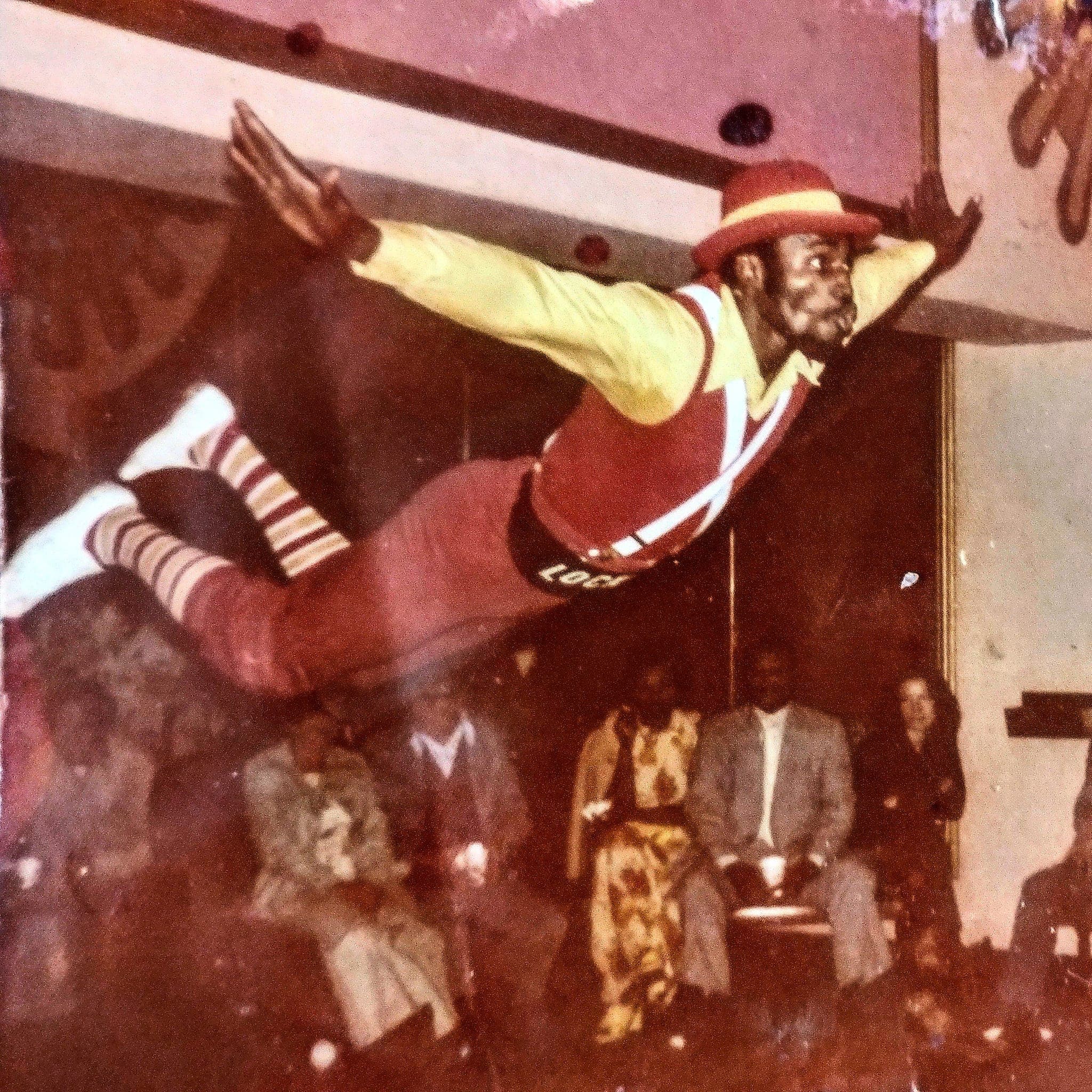
Half splits는 락킹 이전에도 Nicholas Brothers, Sammy Davis Jr. Trio 같은 가수와 댄서, 그룹들이 공연 중 사용했습니다. 1960-70년대 James Brown은 half split을 크게 대중화했습니다. 그의 무대 춤과 스텝은 아프리카계 미국인 소셜 파티에서 널리 따라 했고, half splits와 The Alligator 같은 플로어 무브가 포함됐습니다. Camel Walk와 Mashed Potato 같은 무브도 그의 공연에서 가져와 사용됐습니다. 이러한 영향은 매우 컸습니다. Don Campbell 역시 파티 댄스의 흐름 속에서 소셜 댄스와 locks 사이에 half splits와 knee drops를 계속 사용했습니다. Kick splits는 Don Campbell이 락킹에 도입했지만 그 이전에도 James Brown, 탭댄서, 파티 댄서들이 사용했습니다. High-flying knee drops, running knee drops, Swan Dive도 Don의 스타일의 일부가 됐습니다.
32
BUTT DROPS
John “Sambo Lock” McCloud가 만든 역동적이고 대담한 stunt입니다. 댄서가 점프해 두 발을 앞으로 뻗은 뒤 음악의 비트에 정확히 맞춰 엉덩이로 착지합니다.
33
LOCKING HAND SHAKES
Soul Train Dance Contest에서 Damita Jo Freeman과 Jimmy “Scooby Doo” Foster가 함께한 모습이 초기 사례로 기록됩니다. 일부 Locking handshakes는 Greg “Campbellock Jr.” Pope가 만들었고 Greg Campbellock Jr.와 Fluky Luke가 처음 선보인 것으로 전해집니다(Wattstax 영상 참고). GoGo Brothers도 여러 다른 핸드셰이크를 도입했습니다. 이러한 핸드셰이크는 도심 지역의 거리에서 사용되던 unity handshakes를 표현한 것입니다.
34
THE ROBOT
기술적으로 Robot 자체가 lock은 아니지만, Don Campbell과 Charles “Robot” Washington의 관계를 통해 Roboting은 락킹의 역사와 오랫동안 함께해 왔습니다. 락킹이 발전하는 과정과 상업적인 락킹 공연 양쪽에 포함되면서 두 형식은 계속 연결됐습니다. Charles “Robot” Washington은 Robot을 하나의 춤으로, 그리고 락킹 서브컬처 안에 소개한 핵심 인물로 기록됩니다.
35
Your freestyle
You can be free in your own style while remaining within an established dance form such as Locking. In the end, what matters is how you present and represent the dance. Campbellocking was Don Campbell’s freestyle. It inspired what people today call Locking, and many dancers have since contributed steps and ideas to the form. Ultimately, though, the dance also comes down to how you represent yourself.
Words from Don himself
“Nobody can beat you being you.”
Don explains that you can copy or follow someone for a while when you are learning, but eventually something has to come from within yourself.
“Nobody can beat you being you.” If you spend all your time trying to copy somebody else, you will never beat that person at being themselves. You have to keep something of yourself in the dance. Take everything you learn from other people and evolve from it.
When you walk out onto the floor, you should be yourself.
You can learn Don Campbell’s way of doing things, but to truly understand his approach, you also have to understand the freedom behind it. If Don goes left, you do not have to go left — you can go right. Go the way you feel. Hold your arms the way that feels natural to you.
You are still doing the same dance, but you are doing it your way. And that is the beauty of it.
Don then talks about staying humble and gives credit to God for guiding him. He says that in the early days he never asked to become “Don Campbell” or to create something important. When people ask him how he created the dance, he says he does not really know — he felt that his inner voice simply told him to get out there and do what he did, and he was grateful to have been chosen.
구전 전통과 당사자 중심 자료에 따라 명칭이나 창작자에 대한 설명이 달라질 수 있습니다. 근거가 충분하지 않은 경우에는 크레딧을 단정하지 않고 열어 둡니다. 더 많은 내용을 문서로 확인할 수 있게 되면 이 목록도 계속 확장될 수 있습니다.