Las bases en movimiento
Pasos y movimientos
Explora los nombres, orígenes e historias detrás de los movimientos que dieron forma al Locking.
35 movimientos y pasos
Los movimientos y pasos de Campbellocking y Locking no existieron desde el principio como una lista fija. Don Campbell llevó al baile sus propias ideas y movimientos que ya existían a su alrededor; a medida que la danza crecía, otros pioneros crearon, modificaron, nombraron y combinaron nuevas ideas.
Algunos movimientos están relacionados con gestos cotidianos y Social Party Dances, como señalar, saludar o chocar las manos. Elementos como footwork rítmico, splits, acrobacia y showmanship tienen precedentes anteriores dentro del vernacular jazz dance y tap dance afroamericanos, formas que a su vez forman parte de una historia más larga de la diáspora africana y de conexiones con culturas tradicionales de danza africana. Esto no significa que cada movimiento de la lista tenga una única fuente directa. El Locking creció dentro de comunidades afroamericanas de Los Angeles mediante herencia, intercambio, transformación y nuevas creaciones.
01
BASIC LOCK
El Basic Lock consiste en detener de forma repentina el movimiento de los brazos con el ritmo de la música, como si el cuerpo quedara congelado por un instante. A finales de los años sesenta y comienzos de los setenta, Don Campbell desarrolló este tipo de pausa brusca mientras intentaba hacer el baile social Funky Chicken, popular en aquella época. Esas detenciones terminaron conociéndose como locks o locking up.
02
DOUBLE LOCK
El Double Lock repite el lock dos veces seguidas, creando una sensación de rebote y una acentuación rítmica. Don Campbell puede verse utilizando este recurso en sus primeras apariciones en Soul Train junto a Damita Jo Freeman, donde la repetición del lock servía tanto para marcar el pulso como para dar forma a su timing personal.
03
THE LEO LOCK
Leo “Fluky Luke” Williamson desarrolló este lock distintivo colocando la parte exterior de ambas manos sobre la cintura y bloqueando los codos hacia delante. Su extraordinaria flexibilidad daba a la posición una forma muy marcada, y otros lockers flexibles también comenzaron a realizarla.
04
GIVING OR ASKING FOR FIVE
Es un hand slap utilizado durante el baile para expresar reconocimiento, conexión o ánimo entre dos personas. Don Campbell incorporaba este gesto entre locks y bailes sociales. Give Five ya existía mucho antes de que Don lo llevara a la danza y era un gesto tradicional de reconocimiento dentro de comunidades afroamericanas. Cuando alguien veía un movimiento fuerte y respondía con una sonrisa, Don y otros pioneros a veces extendían la mano para recibir un five; el contacto de las palmas confirmaba ese reconocimiento. En esencia, Giving Five es una forma compartida de decir: “eso estuvo bueno”.
05
LOCKING POINTS
Más tarde también llamados Uncle Sam points, un nombre que recuerda al famoso cartel estadounidense en el que Uncle Sam señala directamente al espectador. Dentro de comunidades afroamericanas, señalar a un amigo o compañero ya era un gesto utilizado para comunicar, reconocer o saludar a alguien a distancia antes de que Don Campbell lo incorporara al baile. Una historia transmitida cuenta que, mientras Don bailaba, una mujer sentada en una mesa vio su estilo particular y sonrió; Don la señaló como se hacía normalmente para decir “te veo”. Ese momento se considera una de las posibles fuentes tempranas del Locking point. Más adelante otros pioneros añadieron double y triple points, ayudando a que las transiciones del Locking fueran más fluidas.
06
HAND CLAPS
Los back hand claps y back-front hand claps son elementos muy básicos del Locking temprano. Pueden utilizarse para detener y reiniciar el movimiento, marcar el pacing o conectar distintas acciones. Don también incorporó wrist rolls tempranos a su estilo. Con el tiempo, diferentes combinaciones de wrist rolls y otros movimientos se colocaron antes de los back-front hand claps, ayudando a crear continuidad y a ampliar el vocabulario de la danza.
07
UPLOCK
El UPLOCK, hoy también llamado con frecuencia Muscle Man, suele utilizarse al iniciar una secuencia de Locking lanzando ambos brazos hacia arriba. Tiene una sensación de anuncio, parecida a saludar en la calle con un “Hey” o “What’s up?”, dejando claro para quienes están alrededor: aquí estoy.
08
PACE / KEEPING TIME
Pace, también llamado Keeping Time, es un movimiento rítmico fundamental que sirve para mantener el pulso y conectar movimientos de Locking. Un brazo se lanza hacia un lado, alejándose del cuerpo, al ritmo de la música. El gesto puede recordar cómo músicos y público de jazz marcan el pulso; dentro del Locking también puede adoptar un carácter más cercano a la marcha o a lo militar.
09
WRIST TWIRL / WRIST ROLLS
Los wrist twirls, también llamados wrist rolls o rolls, son un movimiento fundamental del Locking. Con las manos cerradas, las muñecas giran en un movimiento fluido al ritmo de la música que puede terminar en un lock o una parada marcada. Don Campbell incorporó los primeros wrist rolls a su estilo, y combinaciones posteriores ayudaron a crear continuidad entre movimientos.
10
THE DON CAMPBELL WALK
Movimiento de desplazamiento con slide creado por Don Campbell para avanzar entre locks y stunts.
Material de O.G. Skeeter Rabbit
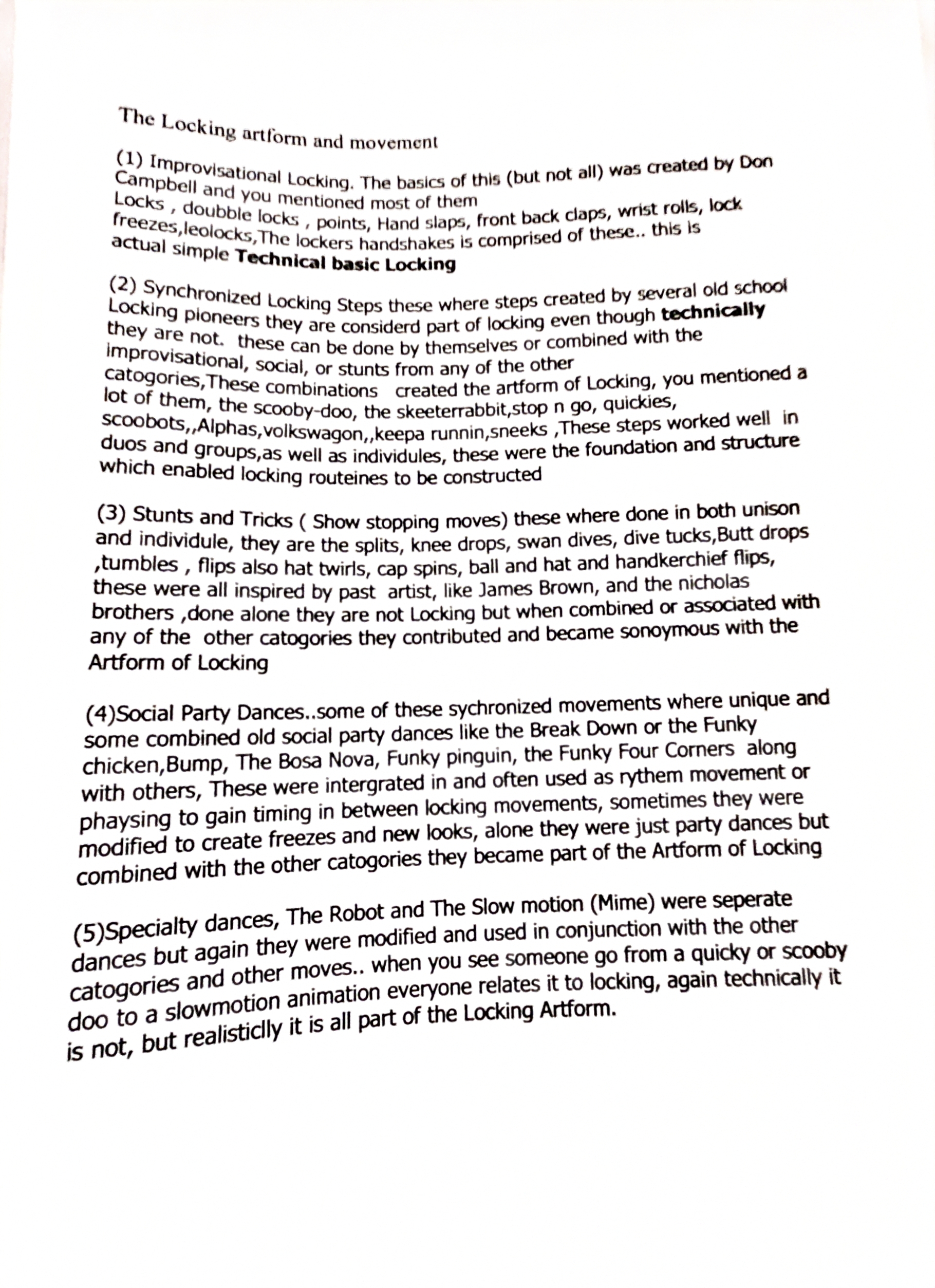
Cinco familias de elementos que forman el Locking
O.G. Skeeter Rabbit utilizó cinco familias de movimiento para explicar que Locking es mucho más que un solo movimiento. Cada una puede existir por sí misma, pero adquiere un papel especial cuando se combina con el timing, el carácter y los locks del Locking.
- 01
Improvisational Locking
Base técnica e improvisación
Locks, points, hand slaps, wrist rolls, freezes y otros movimientos básicos utilizados libremente durante la improvisación.
- 02
Synchronized Locking Steps
Pasos sincronizados de Locking
Pasos desarrollados por distintos pioneros que pueden utilizarse en rutinas de solo, dúo o grupo.
- 03
Show-stopping moves
Stunts y movimientos de impacto
Incluyen splits, knee drops, dives, flips y tricks con props. Al combinarse con el resto del lenguaje del Locking pasan a formar parte de la danza.
- 04
Social Party Dances
Bailes sociales y de fiesta
Las danzas sociales de la época mantienen groove, timing y transition entre los movimientos de Locking y conservan viva la conexión con la cultura de la pista de baile.
- 05
Specialty dances
Formas de danza especiales
Robot, slow motion y mime pueden existir como formas independientes; al integrarse al Locking crean contraste, sensación animada y nuevas combinaciones.
 Abrir imagen original
11
THE SCOOBY DOO
Creado por Jimmy “Scooby Doo” Foster. El Scooby Doo básico comienza con un uplock announcement realizado con ambas manos y continúa conectando un kick con un step.
12
THE SCOOBOT
Otro paso característico creado por Jimmy “Scooby Doo” Foster.
13
THE SCOOBY WALK
Una forma particular de caminar de Jimmy Foster, con similitudes con lo que Greg llamó Pimp Walk.
14
THE PIMP WALK
Creado por Greg “Campbellock Jr.” Pope. Los distintos movimientos que Greg aportó al Locking ayudaron a que la danza desarrollara un flow más libre y continuo. También transformaba el Scoobot en una variación con hop. Movimientos como Sneek y Stop N Go (Quickies), mencionados más adelante, fueron desarrollados por Jimmy “Scooby Doo” Foster bajo la influencia de ideas de Greg Campbellock Jr.; varios de sus nombres fueron puestos por Damita Jo Freeman.
15
QUICKIES /STOP N GO
Quickies, también conocido como Stop N Go, se desarrolló como una variación del antiguo Sara Walk. La sensación de rebote rápido recuerda a un personaje de caricatura que salta como si fuera de goma.
16
THE SKEETERRABBIT
Creado por James “Skeeter Rabbit” Higgins. El movimiento recibió inspiración del shuffle de Nicholas Brothers y del juego callejero hopscotch. Skeeter lo conectó al final del Scooby Doo para convertirlo en una combinación continua y después desarrolló distintas formas del paso. Otros pioneros también crearon variaciones del Skeeter Rabbit shuffle. Hacia mediados de los años setenta, algunos movimientos de baile vinculados con la cultura de pandillas callejeras empezaron a mezclarse con Locking; por ejemplo, en ocasiones se añadía un Crip Walk al final de Skeeter Rabbit, y Michael “Peekaboo” Frenke y Leo “Shaboo” Walker suelen mencionarse dentro de esta línea de desarrollo.
17
HAT TWIRLES
Los hat twirls ya eran utilizados por numerosos artistas antes de entrar al Locking. Varios bailarines los incorporaron a sus estilos, y “Sneaky T” y John “Okie Doke” Wilson fueron especialmente conocidos por sus movimientos con sombrero. Más tarde se convertirían también en una signature muy asociada a Don Campbell; sin embargo, registros señalan que el basic hat spin fue enseñado a Don por Skeeter Rabbit durante la primera gran gira de The Lockers en 1974.
18
THE WHICH A WAY
Leo “Fluky Luke” Williamson desarrolló Which-A-Way como uno de los movimientos característicos del Locking. Sin embargo, el movimiento se originó en un baile social creado por Damita Jo Freeman; su versión era más lenta e incluía una rotación de cintura más marcada. Ella llamaba a su versión “DJ Which-A-Way”, y puede verse en varias imágenes de Soul Train.
19
LEO WALK
Leo Walk es un movimiento de desplazamiento en el que se camina de lado a lado manteniendo una sensación de rocking.
20
KILLING ROACHES / SLAPPING ROACHES / CATCHING ROACHES
Gesto realizado cerca del piso en el que el bailarín golpea el suelo con la mano siguiendo el ritmo de la música, como si estuviera atrapando o aplastando insectos. Históricamente se han utilizado varios nombres, entre ellos Killing Roaches, Slapping Roaches y Catching Roaches. Como las fuentes y la terminología no son completamente consistentes, aquí no se atribuye el movimiento a un único creador.
21
THE SLOW MOTION
Introducido al Locking por Fred “Mr. Penguin” Berry. Slow Motion es una forma de expresión influida por el mime en la que todos los movimientos se ralentizan y se enfatizan las expresiones faciales.
22
THE VOLKSWAGON
Volkswagon está inspirado en manejar un automóvil con transmisión manual. El bailarín imita el cambio de velocidades y el tirón hacia delante del vehículo, colocándolo con precisión dentro del ritmo de la música.
23
THE FUNKY GUITAR
Movimiento basado en gestos que imita tocar una guitarra siguiendo el ritmo de la música. LockerLegends documentó este movimiento en imágenes tempranas de Damita Jo Freeman en Soul Train y en material donde baila en pareja con Don Campbell.
24
THE HITCHHIKE
Paso que imita el gesto de pedir un aventón. El bailarín mantiene el pulgar levantado y se desplaza lateralmente mientras incorpora un funky hip groove con sensación cercana al Rocksteady.
25
SNEEK
Sneek es una variación del Soul dance Breakdown. El bailarín gira la parte superior del cuerpo de lado a lado mientras levanta el brazo exterior y hace un gesto parecido a buscar algo. Más adelante The Lockers desarrolló una versión que utilizaba el brazo interior para que el movimiento se viera con mayor claridad desde los ángulos de cámara en escenarios comerciales.
26
THE HELICOPTOR
The Helicopter era la manera de Mr. Penguin de señalar, reconocer y saludar sucesivamente a todas las personas alrededor mediante un movimiento continuo.
27
THE KEEPA RUNNIN
Creado por Tony Lewis y Buddy Lombard de GoGo Brothers. Keepa Runnin es un movimiento de footwork que combina kick, step y slide.
28
The Sara Walk
Sara Walk es un movimiento de desplazamiento en el que se avanza y retrocede manteniendo un pacing continuo.
29
THE SUPER FLY
Movimiento que utiliza un sombrero: el bailarín mueve la cabeza imitando a una mosca que zumba y vuela alrededor.
30
THE “ALPHA”
Creado por Alpha Omega Anderson e incorporado a su estilo personal de Locking. Es un movimiento de piso parecido a un handspring hacia atrás. Su estilo también incluía giros rápidos y un Locking move con sensación de corkscrew.
31
STUNTS & SPLITS
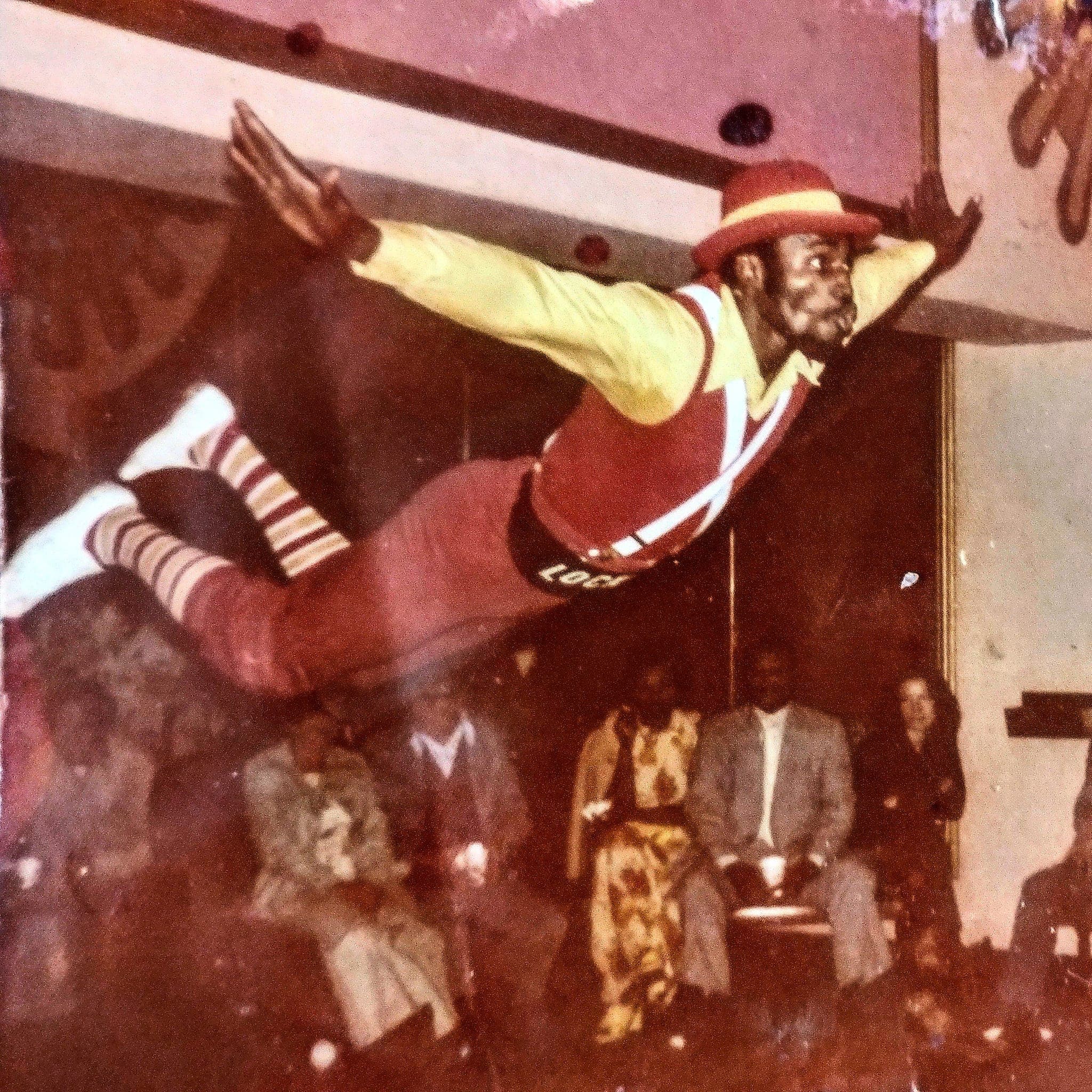
Antes de la aparición del Locking, cantantes, bailarines y grupos como Nicholas Brothers y Sammy Davis Jr. Trio ya utilizaban half splits en sus presentaciones. Durante los años sesenta y setenta, James Brown popularizó enormemente el half split. Su baile escénico y sus pasos fueron imitados ampliamente en fiestas sociales afroamericanas, incluidos half splits y movimientos de piso como The Alligator; movimientos como Camel Walk y Mashed Potato también se difundieron aún más gracias a sus presentaciones, con una influencia enorme. Don Campbell, dentro del mismo contexto de bailes sociales, utilizaba con frecuencia half splits y knee drops entre social dances y locks. Los kick splits fueron llevados al Locking por Don Campbell, aunque antes ya eran utilizados por James Brown, tap dancers y party dancers. High-flying knee drops, running knee drops y Swan Dive también se convirtieron en parte de su estilo personal.
32
BUTT DROPS
Creado por John “Sambo Lock” McCloud. Es un stunt fuerte y llamativo en el que el bailarín salta, extiende ambas piernas hacia delante y aterriza sobre los glúteos exactamente con el golpe de la música.
33
LOCKING HAND SHAKES
El movimiento realizado conjuntamente por Damita Jo Freeman y Jimmy “Scooby Doo” Foster durante el Soul Train Dance Contest es uno de los primeros ejemplos registrados. Algunos Locking handshakes fueron creados por Greg “Campbellock Jr.” Pope, y según relatos Greg Campbellock Jr. y Fluky Luke estuvieron entre los primeros en mostrar ciertas variantes; puede consultarse material de Wattstax. GoGo Brothers también desarrolló y utilizó varios handshakes diferentes. Estos gestos reflejan los saludos de manos urbanos utilizados para expresar unidad.
34
THE ROBOT
En sentido estricto, Robot no es un lock, pero la historia del Roboting ha estado entrelazada con la del Locking durante mucho tiempo debido a la relación entre Don Campbell y Charles “Robot” Washington. Aparece tanto en el desarrollo de la danza como en presentaciones comerciales de Locking, por lo que ambas formas han mantenido una conexión histórica. Charles “Robot” Washington está documentado como una figura importante tanto para desarrollar Robot como danza independiente como para incorporarlo a la subcultura del Locking.
35
Your freestyle
You can be free in your own style while remaining within an established dance form such as Locking. In the end, what matters is how you present and represent the dance. Campbellocking was Don Campbell’s freestyle. It inspired what people today call Locking, and many dancers have since contributed steps and ideas to the form. Ultimately, though, the dance also comes down to how you represent yourself.
Words from Don himself
“Nobody can beat you being you.”
Don explains that you can copy or follow someone for a while when you are learning, but eventually something has to come from within yourself.
“Nobody can beat you being you.” If you spend all your time trying to copy somebody else, you will never beat that person at being themselves. You have to keep something of yourself in the dance. Take everything you learn from other people and evolve from it.
When you walk out onto the floor, you should be yourself.
You can learn Don Campbell’s way of doing things, but to truly understand his approach, you also have to understand the freedom behind it. If Don goes left, you do not have to go left — you can go right. Go the way you feel. Hold your arms the way that feels natural to you.
You are still doing the same dance, but you are doing it your way. And that is the beauty of it.
Don then talks about staying humble and gives credit to God for guiding him. He says that in the early days he never asked to become “Don Campbell” or to create something important. When people ask him how he created the dance, he says he does not really know — he felt that his inner voice simply told him to get out there and do what he did, and he was grateful to have been chosen.
Como la tradición oral y las fuentes basadas en testimonios directos no siempre coinciden por completo, los nombres de movimientos y las afirmaciones sobre sus creadores pueden variar. Cuando la evidencia es insuficiente, no presentamos una conclusión absoluta. Esta lista seguirá ampliándose a medida que se verifique más material.